
Knowing how to write a blog post for SEO comes down to a repeatable process: choose one question your customers search, study what Google already ranks for it, and outline your answer under question-style headings. Then open with a direct answer, add first-hand detail, link related pages, and check the title, meta description and images before publishing.
Many SEO blog writing tips still focus on word counts and keyword density, but neither makes a post rank, and Google says it has no preferred word count. What works is a page that answers the searcher’s question better than the pages already ranking, written or reviewed by someone who knows the subject.
The steps below show how to write a blog post for SEO through one worked example, from keyword to published post: a small moving company writing about how to pack for a move. Swap in your own topic as you go.
Key takeaways
- Target one main question per post and match the format Google already rewards for it, such as a step-by-step guide, a list or a comparison.
- Open with a short, direct answer, then use question-style H2s that each start with a one- or two-sentence answer.
- Add first-hand experience such as your own photos, examples and customer mistakes; generic tips anyone could write are easy to replace.
- Write a specific title and a unique meta description, and use descriptive alt text and anchor text.
- Run a pre-publish checklist, then link to the new post from related older pages so readers and Google can find it.
How do you choose the keyword and search intent for a post?
Choose one main question per post, phrased the way customers search it, and confirm the intent by searching it yourself. The results page shows what Google thinks searchers want, which tells you more than any keyword tool metric.
- Format: are the top results step-by-step guides, lists, comparisons, product pages or tools? Match the dominant format.
- Angle: do they target beginners or experts, homeowners or businesses, a particular country or budget?
- Freshness: if most results show recent dates, readers expect current information, and your post will need regular updates.
- Questions: the People also ask box and related searches show subtopics your outline should cover.
- Gaps: what’s missing, vague or outdated in the top pages? That’s where your first-hand knowledge earns its place.
Example: the moving company targets “how to pack for a move”. The top results are step-by-step guides with checklists written for households, so a sales page or a short company-news post would be the wrong format.
To find and prioritize topics in the first place, use our keyword research guide for small businesses. Before writing, check that you haven’t already covered the question; if you have, update the existing post instead of creating a second one that competes with it.
What is the best blog post structure for SEO?
Use one H1 that matches the title, an answer-first introduction, then H2s phrased as the questions readers ask, with H3s for steps or sub-points. Each section should open with a short answer before the detail.
Google says the order of headings doesn’t matter to its systems and there’s no ideal number of them, but a logical hierarchy helps screen-reader users and people skimming on a phone. Write headings that make sense on their own, because many readers jump straight to the section they need.
Example outline: how to pack for a move
- H1: How to Pack for a Move: A Room-by-Room Checklist
- Intro: the answer in about 50 words, then what the checklist covers and who it’s for
- H2: When should you start packing for a move?
- H2: What packing supplies do you need?
- H2: How do you pack each room? (H3s for kitchen, bedrooms, living room and garage)
- H2: How do you pack fragile items so they arrive in one piece?
- H2: What should you pack last?
- H2: Moving-day checklist (a printable table)
- FAQ: People also ask questions the sections above don’t cover
How do you write a blog post introduction for SEO?
Put the answer in the first paragraph, in roughly 40 to 60 words, with the main keyword used naturally. Follow it with one or two short paragraphs on who the post is for and what it covers, and cut any scene-setting that pushes the answer down the page.
Example intro: “Start packing two to three weeks before moving day, one room at a time, beginning with the rooms you use least. Gather sturdy boxes, tape and padding first, label every box with its room and contents, and keep an essentials box you’ll open first in your new home.”
That paragraph answers the question on its own, so a reader who stops there still leaves satisfied, while the sections below earn the click with detail.
How do you add first-hand experience and E-E-A-T?
Add what only you know: photos of real work, specific examples, the mistakes you see customers make, and a named author with relevant experience. Google’s people-first content guidance asks whether a page shows first-hand expertise and offers insight beyond the obvious.
Google’s guide to generative AI search contrasts commodity content, such as a generic tips list anyone could write, with non-commodity content built on real experience, and recommends the second for both regular results and AI features. Google also says E-E-A-T (experience, expertise, authoritativeness and trustworthiness) isn’t a specific ranking factor, but its systems look for signals of it, and trust matters most.
- A real byline: Google suggests asking whether it’s obvious who wrote the content. Link the byline to an author page describing the writer’s actual experience.
- Your own photos: pictures of your team, jobs and results instead of stock images.
- Specific detail: “wrap plates in paper and stand them on edge in the box” beats “pack plates carefully”.
- Sources for facts you didn’t observe: link prices, rules and statistics to the original source.
- Honesty about process: if AI tools helped draft the post, a person who knows the subject should check every claim and add the examples.
Outsourced writing works when the writer can interview the person who does the work. Whether you use a freelancer or an agency’s content marketing team, book a short call to hand over examples, photos and opinions before drafting starts.
How should you use internal and external links?
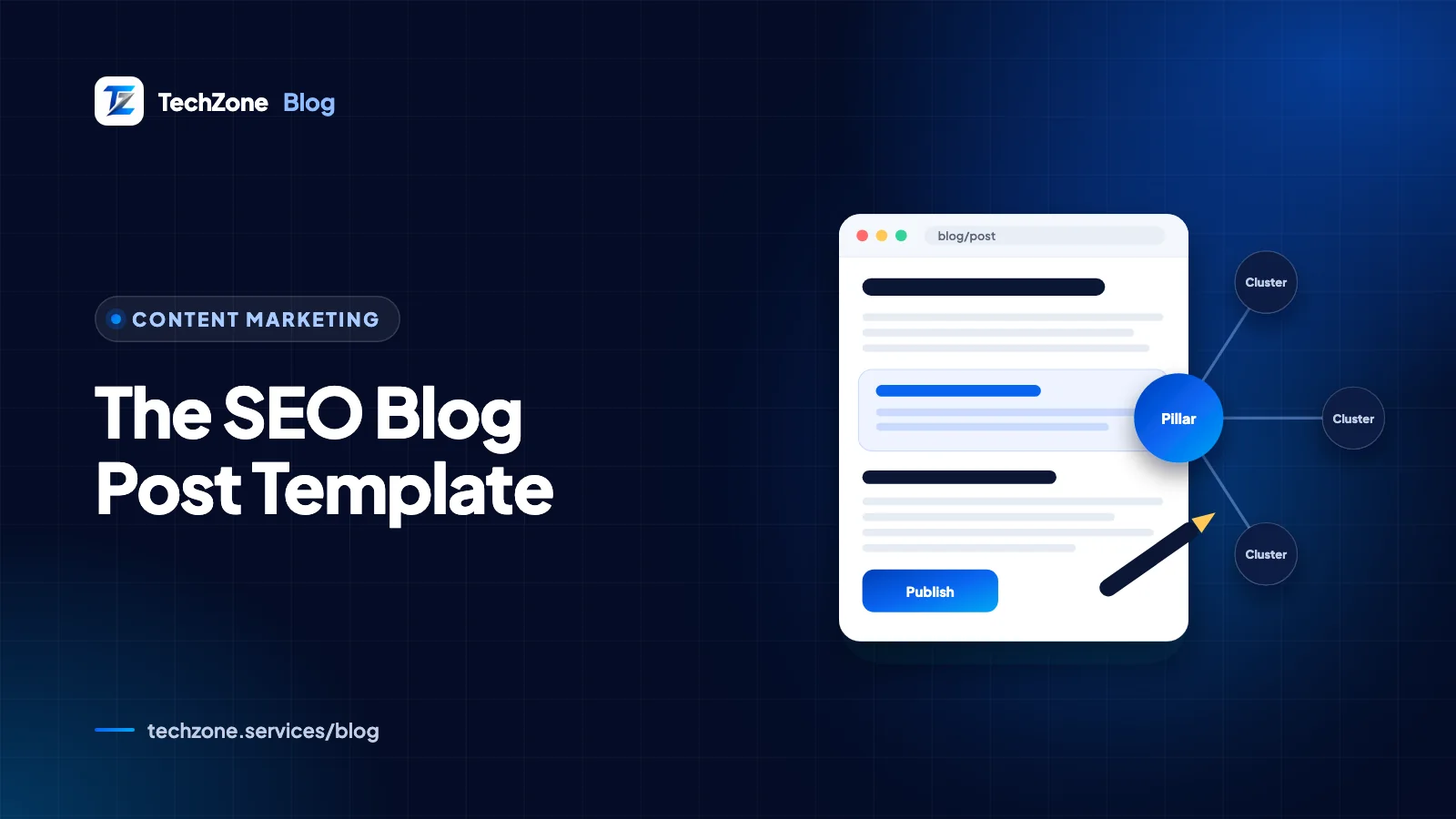
Link to the pages that genuinely help the reader next, such as your related service page, the pillar page for the topic and one or two closely related posts, using anchor text that describes the destination. Then add links to the new post from older pages so it isn’t left without any.
- Descriptive anchors: “our room-by-room packing checklist”, not “click here”. Google’s link documentation says anchor text tells people and Google what the linked page is about.
- No magic number: Google says there’s no ideal count of links per page. Link where it helps, in the body text, not only in a related-posts block.
- Cite your sources: link out to the original page for facts and data. Google notes that external links citing sources can help establish trustworthiness.
- Link back from older posts: add a contextual link to the new post from two or three related pages you’ve already published.
Example: the packing guide links to the company’s moving services page, to its pillar guide on planning a move, and to a post on choosing a moving company. If you’re planning several connected posts, our guide to content marketing strategy for small businesses explains how pillar pages and topic clusters fit together.
How do you write the title tag and meta description?
Write a title that states the topic and the promise in plain words, with the main keyword near the front, and a meta description that summarizes this specific page like a short pitch. Google may build its title link and snippet from other text on the page, so make both accurate and distinctive rather than stuffed with keywords.
| Element | Do | Avoid |
|---|---|---|
| Title element | Describe the page concisely; keep it close to the H1; add your brand briefly at the end | Keyword stuffing, vague titles such as “Blog”, the same boilerplate on every page |
| Meta description | Summarize this page in a sentence or two with its most relevant points | Identical descriptions across pages, lists of keywords |
| Length | Put the important words first, since Google truncates long titles to fit the screen | Assuming a character count guarantees what searchers see |
Example title: “How to Pack for a Move: Room-by-Room Checklist”. Example meta description: “Start two to three weeks out, pack room by room and label every box. Our movers’ checklist covers supplies, fragile items and what to pack last.”
How do you optimize images, readability and formatting?
Use your own images with descriptive file names and alt text, keep paragraphs short, and use lists and tables wherever readers follow steps or compare options. Good formatting makes a page easier to scan without chopping it into fragments.
- Alt text: describe what the image shows and how it relates to the text, such as “Plates wrapped in packing paper standing upright in a box”.
- File names and placement: use names like
packing-plates-upright.jpgrather thanIMG_0042.jpg, and place each image near the text it illustrates. - Formats and size: Google Search supports JPEG, PNG, WebP and AVIF, among others. Compress images so the page loads quickly on mobile data.
- Readable text: a few sentences per paragraph, a numbered list for steps, a table for comparisons, and bold only for genuinely key terms.
Length should follow the question, not a target; our guide to blogging frequency and post length shows how to judge the right depth for each query. Formatting for AI search needs no special tricks either: Google’s guidance says you don’t need to break content into tiny chunks, add llms.txt files or special markup for AI Overviews and AI Mode.
What should you check before you publish?
Run the same checklist on every post. It takes a few minutes and catches the mistakes that cost rankings and leads.
| Check | What good looks like |
|---|---|
| Search intent | Format and angle match the top results for the main query |
| Introduction | Direct answer in the first paragraph, main keyword used naturally |
| Headings | One H1; question-style H2s; every section opens with an answer |
| Experience | At least one example, photo or insight from your own work |
| Facts and sources | Prices, rules and numbers checked against the original source and linked |
| Internal links | Service page, pillar page and related posts linked with descriptive anchors |
| Title and meta description | Unique and specific, main keyword near the front, no stuffing |
| Images | Own photos where possible, descriptive file names and alt text, compressed |
| Author and date | Byline linked to an author page; visible publish date; Article markup if your SEO plugin adds it |
| Call to action | One clear next step, such as a quote form or booking link |
| Mobile read-through | The whole post read on a phone before it goes live |
After publishing, link to the post from related older pages, send it to your email list, and request indexing through URL Inspection in Search Console if the page matters commercially. For a wider page-by-page review that includes technical elements, use our on-page SEO checklist.
How TechZone can help
If writing isn’t where your time is best spent, TechZone can take over part or all of this process. We research keywords and search intent, write briefs your team or ours can follow, draft posts using first-hand input gathered in a short interview with you, and edit and publish them with titles, links and images handled. Our digital marketing services also cover promoting each post through social media and email. Contact us with a topic you want to rank for, and we’ll suggest an approach.
Frequently asked questions
How many keywords should one blog post target?
A blog post should target one main keyword or question, plus close variants and related subtopics that share the same search intent. Covering those related questions helps the post appear for many longer searches. If two keywords need different answers or formats, they belong in separate posts linked to each other, rather than one post trying to rank for both.
Should I use AI to write SEO blog posts?
AI tools can help with research, outlines and first drafts, and Google’s guidance accepts AI-assisted content as long as it meets its Search Essentials and spam policies. The risk is publishing generic text that adds nothing new, or generating many pages mainly to rank, which Google treats as scaled content abuse. Use AI as an assistant, then add first-hand examples, check every fact and have a subject expert approve the post.
How long does it take for a new blog post to rank on Google?
There is no fixed timeline for a new blog post to rank. Google has to discover, crawl and index the page first, and its SEO Starter Guide says changes can take anywhere from a few hours to several months to show, suggesting you wait a few weeks before judging results. A new post also tends to be found sooner when related pages on your site link to it.
What is a good keyword density for SEO?
There is no good keyword density to aim for. Google describes excessively repeating the same words as keyword stuffing, which is against its spam policies. Use the main keyword where it reads naturally, such as the title, opening paragraph and one heading, and use synonyms elsewhere. Google’s systems understand synonyms and related phrasing, so varied wording helps readers without hurting relevance.
What makes a blog post SEO-friendly?
An SEO-friendly blog post is easy for search engines to crawl and understand and fully answers the searcher’s question. It targets one clear topic, uses descriptive headings, opens with a direct answer, includes original detail, and links to related pages with descriptive anchor text. It also has a specific title, a unique meta description, image alt text, and a layout that loads quickly and reads well on a phone.
Sources and further reading
- Creating helpful, reliable, people-first content – Google Search Central
- SEO Starter Guide – Google Search Central
- Optimizing your website for generative AI features on Google Search – Google Search Central
- Influencing title links in Google Search – Google Search Central
- Google image SEO best practices – Google Search Central
- Link best practices for Google – Google Search Central